→Skin and Hair
Skin and Hair Ayurvedic Treatment in Patna
A comb full of hair every morning, breakouts that return the week before every exam or every period, and a bathroom shelf crowded with creams that worked for a fortnight. Ayurvedic treatment for acne and hair fall in Patna with Dr. Aditya Kunal (BAMS) looks under the surface, at digestion, sleep, stress, diet and hormones, because skin and hair usually tell you what is going on inside.
In person in Patna, or online from anywhere in India.
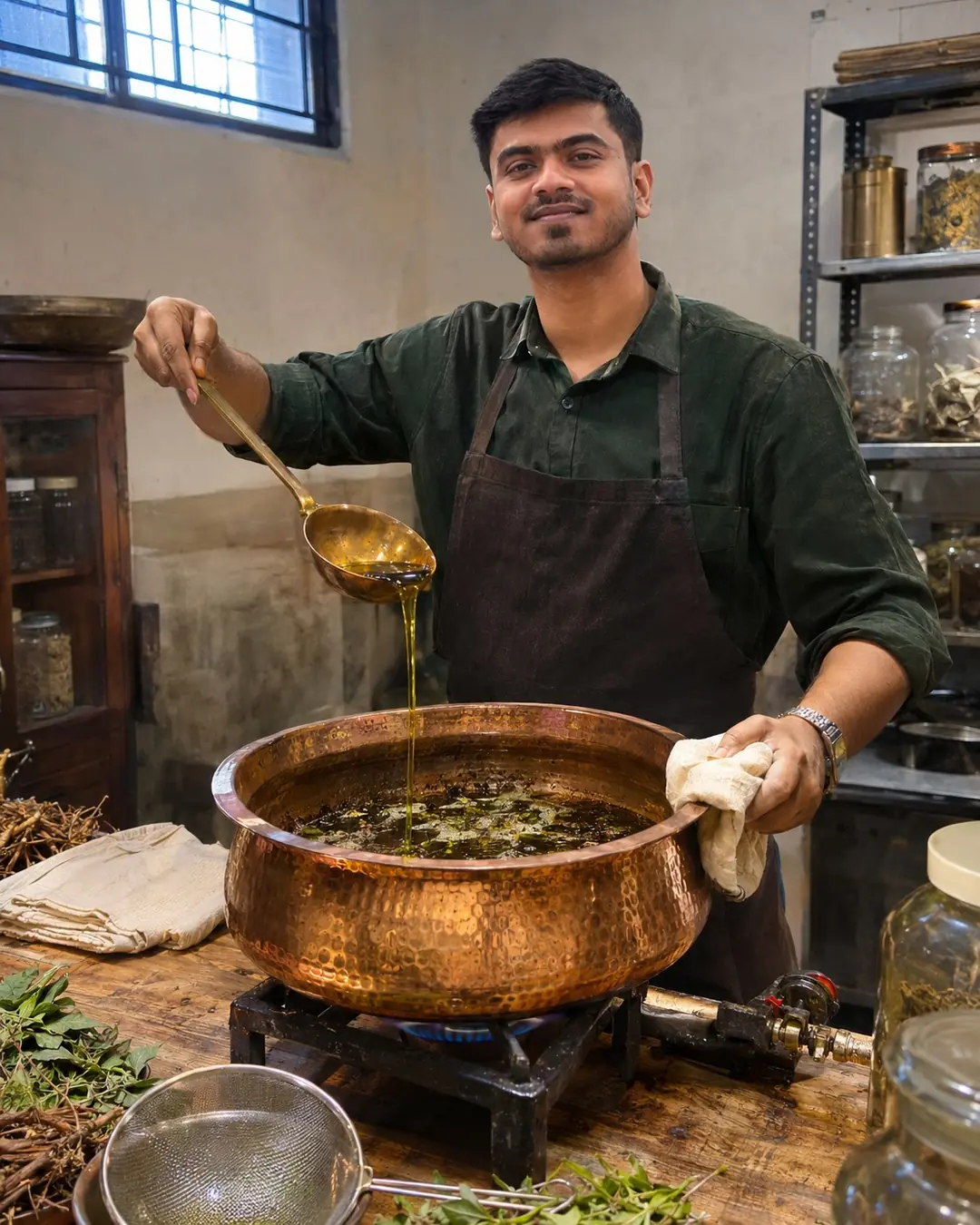
Skin and hair complaints are rarely dangerous, but they hit confidence hard, especially for students and young professionals. They also attract more miracle promises than almost any other area of health. This page lays out how we actually work: what we look at, what we change, what timelines are realistic and when you need a dermatologist instead.
Why Ayurveda starts inside
Classical Ayurveda links the skin closely to rakta dhatu (the blood tissue) and to pitta (the heat principle), and it links hair to asthi dhatu (bone tissue) and overall nourishment. In everyday language, the idea is simple: if digestion is weak, sleep is poor, stress is high and the diet is full of fried, sour and processed food, the skin and scalp show it.
Modern medicine agrees on many of the triggers. The NHS lists hormonal changes (puberty, periods, pregnancy), conditions such as PCOS, some medicines and greasy skin or hair products among the causes of acne. For hair loss it lists stress, illness, weight loss and iron deficiency as common temporary causes, alongside inherited pattern baldness. A good plan respects both views.
Concerns we commonly see
| Concern | Common drivers | Plan focus |
|---|---|---|
| Acne on face, jawline or back | Hormones, oily skin, diet, stress, products | Diet, sleep, gentle skin routine, hormone check where needed |
| Hair fall after illness, fever or crash diet | Temporary shedding, low protein or iron | Nutrition, iron and vitamin reports, patience |
| Gradual thinning at crown or temples | Genetics, hormones, stress | Early medical opinion plus supportive care |
| Dandruff and itchy scalp | Oily scalp, sweat, poor rinsing, stress | Scalp routine, diet, oiling only if it suits |
| Pigmentation and dull skin | Sun, heat, hormones, sleep | Sun protection, cooling diet, routine |
| Dry, itchy skin in winter | Cold dry air, hot baths, low fat diet | Gentle oils, lukewarm baths, enough healthy fat |
What happens at a skin and hair consultation
What Dr. Aditya looks at
- How long the problem has been going on and what makes it flare: exams, periods, heat, certain foods, new products.
- Your skin type and scalp condition. Clear photos in daylight help a lot for online consults.
- Diet: protein intake, fried and sugary food, dairy, tea and coffee, water.
- Digestion: constipation, acidity and bloating often travel with skin flares.
- Sleep, screen time and stress.
- Reports if you have them: haemoglobin, ferritin, vitamin D, B12, thyroid, and hormone tests for women with irregular cycles.
- Every cream, serum, shampoo, oil and medicine you are using.
What you leave with
- Diet pointers for your skin type, whether oily, dry or sensitive.
- A gentle daily and weekly routine you can keep up, usually with fewer products, not more.
- Home remedy guidance with patch test advice, because natural ingredients can irritate too.
- Herbal or classical formulations only where suitable, from licensed manufacturers.
- Clear timelines and a follow-up date.
Acne: working on the drivers
For most acne patients, the plan has four parts. First, steadier blood sugar: fewer sugary drinks, sweets and refined flour snacks, and protein at each meal. Second, a cooling, less greasy diet for pitta-type skin, which means fewer fried and very spicy foods for a while. Third, sleep, because late nights and acne are close friends. Fourth, a simple skin routine: wash twice a day with a gentle cleanser, never scrub, remove make-up at night, and do not pick or squeeze spots, which causes scarring. Our longer article on acne in Ayurveda covers the food side in detail.
If acne comes with irregular periods, excess facial hair or weight gain, PCOS may be part of the picture, and a hormonal evaluation matters. Our PCOS and PCOD care page explains how we handle that combined pattern.
Hair fall: patience and the right tests
Hair fall is one of the most anxious conversations in clinic. The first job is to find out what kind it is. Sudden heavy shedding two or three months after typhoid, dengue, COVID, childbirth, a crash diet or a very stressful event is usually temporary and grows back once the cause settles. Slow thinning at the temples or crown in men, or a widening parting in women, is more often inherited and benefits from an early dermatologist's opinion.
In both cases, nutrition is the foundation. Many young Indian patients, especially vegetarians and women, eat too little protein and have low iron or vitamin levels. Getting reports done and fixing the plate often matters more than the oil you use. Our hair fall guide goes into foods, scalp care and common myths.
What about hair oiling?
Champi with a warm oil is part of most Indian childhoods, and many people find it relaxing and good for a dry scalp. It is not a cure for hair loss, and on an oily, dandruff-prone scalp it can make itching worse if left on too long. We suggest it where it suits your scalp, with clear guidance on how long to leave it and how to wash it out.
Patna weather and your skin
Bihar's climate is hard on skin. The dry loo of May and June brings heat rashes, tanning and acidity-linked flares. The humid monsoon means sweat, fungal infections and oily scalps. Winter brings dryness and cracked heels. Your plan changes with the season:
- Summer: sun protection, cooling foods like cucumber, lauki and coconut water, cotton clothing, and fewer fried snacks.
- Monsoon: keep skin folds dry, wash sweaty clothes promptly, wash the scalp more often, and see a doctor for spreading itchy rashes.
- Winter: lukewarm rather than hot baths, a light oil or moisturiser after bathing, and enough healthy fat in the diet.
Mistakes that keep skin and hair stuck
Over the years we see the same patterns delay progress. If a few of these sound familiar, fixing them is free and often makes a visible difference on its own.
- Switching products every week. Skin needs weeks to respond. Constant switching irritates it and makes it impossible to know what works.
- Layering too many actives. A serum stack copied from social media can damage the skin barrier, leaving it red, stinging and more acne-prone.
- Using steroid creams without a prescription. Over-the-counter fairness or "quick clear" creams sometimes contain steroids, which can thin the skin and worsen acne over time. Check labels and ask a doctor.
- Crash dieting for an event. Rapid weight loss is a known trigger for hair shedding a few months later.
- Ignoring the gut. Patients with chronic constipation or acidity often notice their skin settles once digestion improves. Our digestion and gut care page explains that side of the plan.
- Treating stress as unrelated. Exam seasons, job changes and family pressure show up on the face and in the comb. Sleep and stress are part of the treatment, not an afterthought.
Skin and hair across life stages
The same complaint means different things at different ages, so the plan shifts too. Teenage acne is often hormonal and needs patience, a simple routine and reassurance more than strong remedies. Acne that starts or persists in the late twenties and thirties, especially in women, deserves a look at hormones, stress and products. Hair fall after childbirth is common and usually temporary, but new mothers also need attention to iron, protein and sleep, and any herb must be safe during breastfeeding. Around perimenopause, dryness and thinning become more common, and the plan leans on nourishment, healthy fats and gentle oils. Tell us your life stage at the start so the advice fits.
Your 30-day skin and hair checklist
- Take clear photos in daylight on day 1 and day 30. Memory is a poor judge of change.
- Cut your product shelf down to a gentle cleanser, a moisturiser and sunscreen for 30 days.
- Add a protein source to every meal: dal, chana, sattu, curd, paneer or eggs.
- Replace one sugary or fried snack a day with fruit, roasted chana or makhana.
- Sleep before 11 pm on at least five nights a week.
- Wash pillowcases twice a week if you have acne.
- Get haemoglobin, ferritin, vitamin D, B12 and thyroid checked if hair fall is heavy, after discussing with your doctor.
- Do not pick, squeeze or scrub spots.
Realistic timelines
| Concern | When change usually starts to show |
|---|---|
| Oiliness and new breakouts | 4 to 6 weeks of consistency |
| Overall acne picture | 8 to 12 weeks |
| Reduced hair shedding | 2 to 3 months |
| Visible regrowth | 3 to 6 months or longer |
These are typical ranges, not promises, and results vary. Anyone promising clear skin in seven days or new hair in a month is selling hope.
Panchakarma for skin, when it fits
For some long-standing skin conditions, classical detox therapies such as virechana (therapeutic purgation) are part of Ayurvedic care. They are done only after a consultation, at a proper centre, under qualified medical supervision, and they are not right for everyone. Our article on Panchakarma for skin explains who may benefit and who should avoid it.
When to see a dermatologist promptly
- Sudden round bald patches, or hair loss with scalp scaling or pain.
- Deep, painful cysts or acne that is scarring.
- Rapidly spreading rashes, blisters or skin infections with fever.
- Any mole that changes shape, colour or size, bleeds or itches.
- Skin problems that are seriously affecting your mood or confidence.
Keep using whatever your dermatologist prescribed unless they advise otherwise. Ayurvedic care can run alongside it.
Skin and hair care in Patna and online
Dr. Aditya sees patients near Bajrang Puri. Students from the hostels and coaching centres around Boring Road make up a big share of our acne patients, and many families from Rajendra Nagar and Kankarbagh come in for hair fall after illness or childbirth.
Skin and hair consultations also work well online if you send clear daylight photos beforehand. An online Ayurvedic consultation is a 30 minute video call for Rs 399, with a written plan and follow-ups, from anywhere in India.
Start with the root, not the shelf
Before you buy the next cream or hair serum, spend 30 minutes understanding what is driving the problem. Bring your photos, your product list and your reports, and Dr. Aditya Kunal will help you build a simple plan that works from the inside out. Visit near Bajrang Puri or book a video call.
Frequently asked questions
How long before I see a change in acne or hair fall?
Skin often needs 8 to 12 weeks of consistency and hair needs 3 to 6 months. Results vary from person to person. Anyone promising faster is selling hope.
Do I have to stop my dermatologist's cream or tablets?
No. Continue what your dermatologist prescribed unless they advise otherwise. The Ayurvedic plan works on diet, routine and digestion alongside it.
Does hair oiling stop hair fall?
Oiling can soothe a dry scalp and is relaxing, but it does not cure hair loss. On an oily or dandruff-prone scalp, leaving oil on for long can worsen itching. We advise based on your scalp.
Which tests should I get for hair fall?
Haemoglobin, ferritin, vitamin D, B12 and thyroid are commonly checked, and hormone tests for women with irregular periods. Discuss the list with your doctor at the consultation.
Can diet really affect acne?
For many people, yes. Sugary drinks, sweets, refined snacks, fried food and late nights often make acne worse. Diet is one piece alongside hormones, skin care and products.
Are home remedies like neem, haldi or multani mitti safe?
They suit some skin types and irritate others. Always patch test on the inner arm first, avoid broken skin, and stop if it stings or reddens. We guide you on what fits your skin.
Can an online consultation work for skin problems?
Yes, if you send clear daylight photos of the affected area. Anything needing a close examination or procedure will be referred to a dermatologist.
Sources and further reading
We also serve these areas
Other concerns

→Book your consultation
Start with one honest conversation.
Thirty unhurried minutes with Dr. Aditya, in Patna or on video. You leave with a written plan and a date to check back in.