→Joint, Back and Neck Pain
Joint Pain and Arthritis Ayurvedic Treatment in Patna
Climbing the stairs to the first floor takes longer than it used to. Your knees creak when you get up from the floor after puja, your lower back stiffens by evening, and the painkiller strip is never far away. Ayurvedic treatment for joint pain and arthritis in Patna with Dr. Aditya Kunal (BAMS) works on what feeds the pain: weight, movement, posture, digestion and sleep, with a plan you can follow at home.
In person in Patna, or online from anywhere in India.
Joint and back pain is one of the most common reasons people in their forties, fifties and beyond look for Ayurvedic care, but we increasingly see it in younger patients too: desk workers with neck pain, students with back pain from hours bent over books, and young mothers with aching knees. This page explains how we approach joint, back and neck pain, what Ayurveda can and cannot offer, and when you need an orthopaedic doctor or a scan first.
Understanding joint pain in Ayurveda
Classical Ayurveda describes degenerative joint pain as sandhivata, where aggravated vata (the principle of movement and dryness) settles in the joints and dries out their natural lubrication. The texts describe swelling that feels like an air-filled bag, pain on movement and reduced range, which sounds very much like osteoarthritis. A different pattern, amavata, involves ama (undigested metabolic residue) and is associated with swelling, stiffness and heaviness in many joints, and it overlaps with inflammatory arthritis such as rheumatoid arthritis.
This distinction matters in practice. Wear-and-tear pain usually needs warmth, nourishment, oiling and strengthening, while inflammatory pain needs a different diet and a proper medical diagnosis first. Getting the pattern right is the first job at your consultation.
What the evidence says about osteoarthritis
The World Health Organization estimates that around 528 million people worldwide were living with osteoarthritis in 2019, with the knee the most commonly affected joint, followed by the hip and hand. About 60 percent of those affected are women. Risk factors include age, joint injury, repetitive stress from work or sport, obesity and metabolic conditions such as diabetes. WHO also notes that exercise to strengthen the muscles around the joint and keeping a healthy weight can ease symptoms and slow progression.
This is good news, because those are exactly the levers a lifestyle plan can pull. It is also a reminder that no oil, powder or tablet can rebuild worn cartilage, and anyone who promises that is misleading you.
Pain patterns we commonly help with
| Pain pattern | Typical patient | Plan focus |
|---|---|---|
| Knee pain on stairs and squatting | Over 40, often overweight, often women | Weight, strengthening, warm oil, diet |
| Lower back stiffness | Desk workers, drivers, homemakers | Posture, movement breaks, core work |
| Neck and shoulder pain | Students, office workers, heavy phone use | Screen setup, stretches, sleep posture |
| Morning stiffness in many small joints | Any age, often women | Rheumatology check first, then supportive diet |
| Heel and ankle pain | Long standing hours, weight gain | Footwear, stretching, weight |
What happens at your consultation
What Dr. Aditya asks and checks
- Exactly where it hurts, since when, and whether it began after an injury.
- What makes it worse (stairs, sitting, mornings, cold weather) and what eases it.
- Swelling, redness, warmth, morning stiffness and how long it lasts.
- Your work, posture, phone and screen habits, and how much you move.
- Weight trend, digestion, sleep and stress.
- X-rays, MRI reports, blood tests such as uric acid, vitamin D, thyroid or rheumatoid factor if done.
- Every painkiller and supplement you take, and how often.
What your plan includes
- Diet pointers that suit your pattern: warm, nourishing food for vata-type pain, lighter food that reduces ama for heavy, swollen joints.
- A short, safe daily routine of stretching and strengthening matched to your joints.
- Home care guidance such as warm oil massage (abhyanga) and warm fomentation where suitable.
- Herbal or classical formulations only where they suit you, checked against your other medicines. Guggulu-based formulations, for example, are classical options that need a doctor's guidance.
- Referral advice when imaging, physiotherapy or an orthopaedic opinion is the right next step.
Movement: the medicine most people skip
When joints hurt, the instinct is to rest. Short rest helps a flare, but long-term inactivity weakens the muscles that protect the joint, which makes pain worse. The plan always includes movement, adjusted to what you can do:
- For knees: straight leg raises, gentle quadriceps tightening, sit-to-stand from a chair, and walking on flat ground. Avoid deep squats and sitting cross-legged on the floor for long while pain is high.
- For the lower back: gentle pelvic tilts, cat-cow, short walks every hour, and a gradual core routine.
- For the neck: chin tucks, shoulder rolls and a screen raised to eye level.
- Yoga: simple postures such as tadasana, bhujangasana and setu bandhasana help many people, but avoid forcing any pose that causes sharp pain.
Patna's riverside walk along Marine Drive and the open space at Gandhi Maidan are good places for a flat, steady morning walk, especially in the cooler months.
Food and joint pain
Diet will not fix a worn joint, but it influences weight, inflammation and how heavy or light you feel. General principles we use:
- Warm, freshly cooked meals over cold, stale or very dry food, especially in winter.
- Enough protein from dal, chana, curd, paneer, eggs or fish to protect muscle.
- A small amount of ghee or mustard oil in cooking, rather than a fat-free diet that leaves joints feeling dry.
- Fewer fried snacks, sweets and refined flour, which drive weight gain.
- Turmeric and ginger in everyday cooking, which tradition favours for joint comfort.
- For uric acid problems, less alcohol, organ meats and sugary drinks, with plenty of water, along with your doctor's advice.
Our article on knee pain and sandhivata goes deeper into food and daily care for wear-and-tear pain.
Weight and your knees
Every extra kilo you carry is felt by the knees on every step, and more so on stairs. That is why WHO lists obesity as a key risk factor for knee and hip osteoarthritis and recommends a healthy weight as part of management. For many of our knee pain patients, steady weight loss over a few months does more for pain than any single remedy. It does not need to be dramatic. Losing even a few kilos often makes stairs and getting up from a chair noticeably easier.
The challenge is that pain makes exercise hard, and less exercise makes weight gain easier. We break that cycle with low-impact movement such as flat walking, chair exercises and gentle yoga, plus a realistic Indian food plan. If weight is a big part of your picture, our weight management care works hand in hand with the joint plan.
Winter, monsoon and joint pain
Many patients in Patna tell us their joints are worst in the cold, damp months, from December fog to the monsoon. Ayurveda explains this through vata and kapha, both of which rise with cold and damp. In those seasons we lean more on warm meals, warm oil massage before bathing, staying covered in the early morning and keeping up movement indoors when walking outside is not practical.
Your 2-week joint care checklist
- Walk on flat ground for 15 to 20 minutes daily, in two shorter walks if needed.
- Do your knee or back exercises every morning, even when pain is mild.
- Stand up and move for three minutes every hour of sitting.
- Raise your phone and laptop screen to eye level.
- Massage the painful area with warm oil before a warm bath, if your doctor agrees it suits you.
- Use a chair rather than sitting on the floor while knees are painful.
- Track your pain on a 0 to 10 scale each evening.
- Bring your reports and pain diary to the consultation.
Panchakarma and therapies for pain
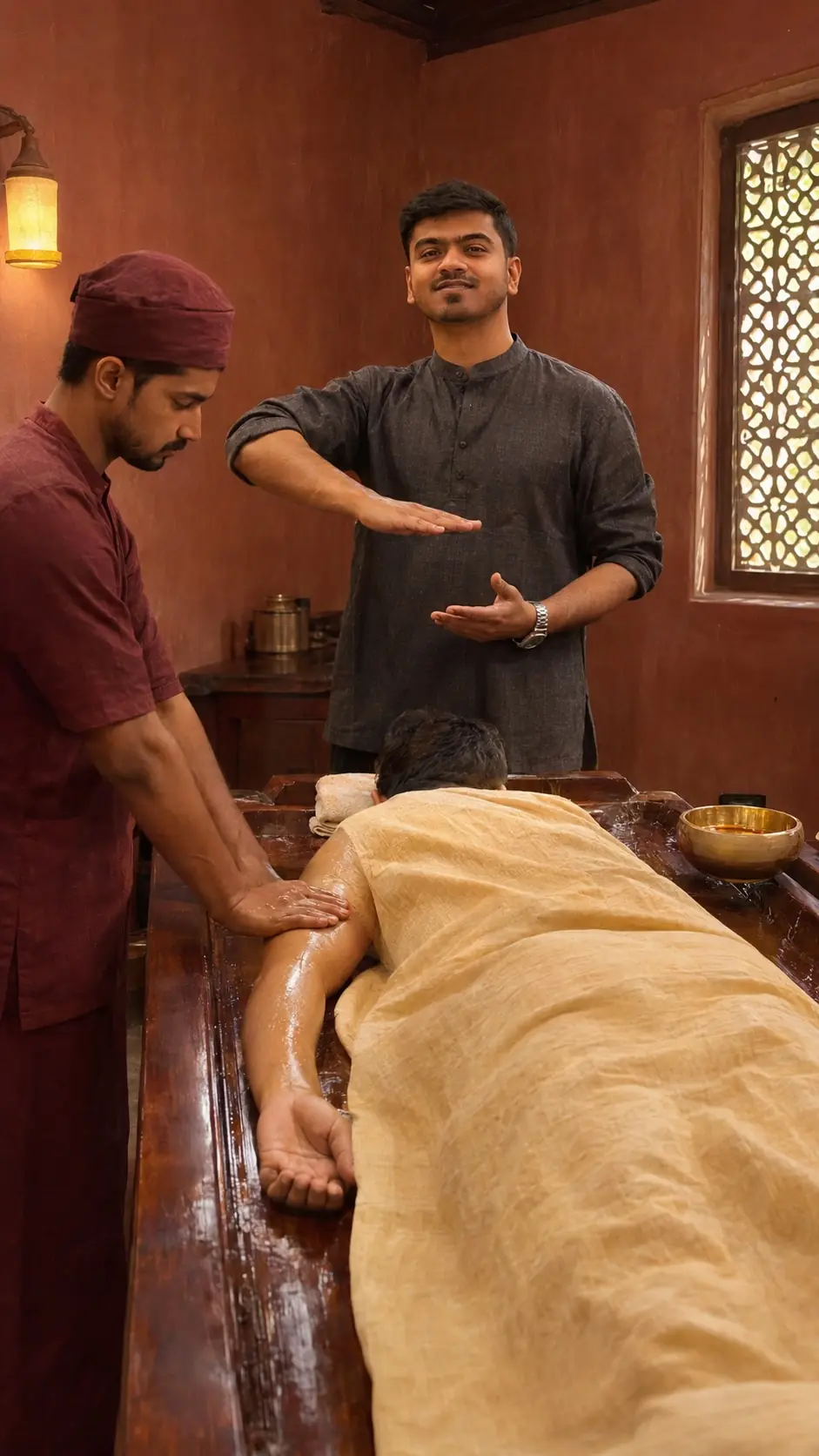
Classical therapies are sometimes part of joint and back care. Janu basti (warm medicated oil pooled over the knee) and kati basti (the same over the lower back), along with abhyanga, swedana (herbal steam) and, for selected cases, basti (medicated enema) are used at Panchakarma centres. They are planned only after a consultation, done by trained therapists under medical supervision, and not suitable for everyone, for example during acute fever, infection or certain heart conditions. Read more in our articles on kati basti for back pain and Panchakarma for joint pain.
| Therapy | Used for | Who should avoid it |
|---|---|---|
| Janu basti | Knee stiffness and pain | Open wounds, acute swelling with fever |
| Kati basti | Lower back pain and stiffness | Recent fracture, acute infection |
| Abhyanga and swedana | General stiffness, vata-type pain | Fever, very weak patients, some heart conditions |
Painkillers and Ayurveda together
Please do not stop prescribed painkillers or other medicines on your own. Use them as your physician advised while we work on the causes. Many patients find that as strength, weight and routine improve, they need them less, and that is a conversation to have with the doctor who prescribed them. Do tell us how often you take painkillers, because frequent use can upset the stomach and kidneys, and that shapes our diet advice.
When to see a doctor urgently
- Pain after a fall, accident or injury, especially if you cannot bear weight.
- Numbness, tingling or weakness in an arm or leg.
- Loss of bladder or bowel control with back pain. This is an emergency.
- A hot, red, swollen joint with fever.
- Back pain with unexplained weight loss, night pain or a history of cancer.
- Chest, jaw or left arm pain, which may be the heart rather than a joint.
Go to a hospital emergency department, such as PMCH, IGIMS or AIIMS Patna, for these. They are not for an Ayurvedic clinic.
Joint pain care in Patna and online
The clinic is near Bajrang Puri, and joint pain brings in many older patients who prefer a short trip. Families from Patna City and around Bajrang Puri often come in with a parent, and patients from Danapur usually plan a single visit and then continue follow-ups online.
An online consultation works well for diet, routine, exercises and remedies, especially for follow-ups or for parents who find travel painful. It is a 30 minute video call for Rs 399. If you need a hands-on examination, imaging or physiotherapy, we tell you plainly. For therapies, consultations at our Panchakarma centre, Sabka Ved Wellness, are arranged after your assessment.
Take the first step toward easier movement
Joint pain does not have to mean a smaller life. Bring your reports, your pain diary and your questions to Dr. Aditya Kunal, and leave with a plan that fits your joints, your age and your daily routine. Visit near Bajrang Puri or book a video call for yourself or a parent.
Frequently asked questions
Can an online consultation help with joint pain?
Yes, for diet, routine, exercises and home care. If you need a hands-on examination, X-ray, MRI or physiotherapy, we tell you plainly and guide the next step.
Should I stop my painkillers?
Not on your own. Use them as your physician advised while we work on weight, strength, posture and routine. Discuss any change with the doctor who prescribed them.
Can Ayurveda regrow knee cartilage?
No. No oil, herb or tablet has been shown to rebuild worn cartilage. Ayurvedic care aims to ease pain, improve movement and slow progression through weight, strengthening and daily care.
Is oil massage good for knee pain?
Warm oil massage helps many people with wear-and-tear stiffness. It is avoided on a hot, red, swollen joint or broken skin. We tell you whether it suits your knees.
What is janu basti and does it hurt?
Janu basti pools warm medicated oil over the knee inside a ring of dough for a set time. It should feel warm and soothing, not painful, and is done by trained therapists after a consultation.
Which foods should I avoid with joint pain?
Cut down on fried snacks, sweets, refined flour and very cold, stale food. With high uric acid, also limit alcohol, organ meats and sugary drinks, alongside your doctor's advice.
Is walking good or bad for knee arthritis?
For most people, regular walking on flat ground is helpful because it keeps muscles strong. Avoid steep slopes and long stairs during flares, and build up slowly.
Do I need an X-ray before coming?
Not always. If you have one, bring it. If your pain followed an injury or has red-flag signs, we will advise imaging or an orthopaedic opinion first.
Sources and further reading
We also serve these areas
Other concerns

→Book your consultation
Start with one honest conversation.
Thirty unhurried minutes with Dr. Aditya, in Patna or on video. You leave with a written plan and a date to check back in.