- BAMS, the Bachelor of Ayurvedic Medicine and Surgery, takes five and a half years: four and a half years of study plus a one year compulsory rotating internship.
- Admission is through NEET-UG, and education standards are set by the National Commission for Indian System of Medicine under the NCISM Act of 2020.
- Students study classical Ayurveda alongside modern anatomy, physiology, pathology and clinical training in hospitals.
- The Ministry of Ayush, formed in 2014, oversees policy, and the CCRAS leads government research in Ayurveda.
- Ayurvedic doctors must be registered, and their right to prescribe modern medicines is limited by law; patients can and should check credentials.
"Is an Ayurvedic doctor a real doctor?" It is a question many people quietly wonder about, and it is a fair one in a country where anyone can put up a board saying "vaidya" and sell herbal powders. The honest answer depends on training and registration, and most patients do not know how either works.
How are Ayurvedic doctors trained today? In India, a qualified Ayurvedic physician completes the BAMS degree, Bachelor of Ayurvedic Medicine and Surgery: four and a half years of academic study followed by a one year compulsory rotating internship, five and a half years in all. Admission is through NEET-UG. Education is regulated by the National Commission for Indian System of Medicine (NCISM) under a 2020 Act, policy is set by the Ministry of Ayush, and graduates must register with a state board or the national register before practising. Postgraduate MD or MS (Ayurveda) adds three years of specialisation.
The path from school to clinic
- Class 12 with Physics, Chemistry and Biology.
- NEET-UG, the same national entrance exam used for MBBS and other medical courses.
- Counselling for seats in government and private Ayurveda colleges.
- Four and a half years of study, divided into professional phases, each ending in university exams.
- One year of compulsory rotating internship in the college hospital's departments, and often in other health facilities.
- Registration with the State Board of Indian Medicine or equivalent, and entry on the national register maintained under NCISM.
- Optional postgraduate study: MD or MS (Ayurveda), roughly three years, followed for some by a PhD.
NCISM has also introduced newer pathways, such as a pre-Ayurveda programme for students from a Sanskrit and gurukul background, but the standard route for most students remains NEET followed by BAMS.
What BAMS students actually study
A common misconception is that BAMS is "only herbs and Sanskrit." In fact, the curriculum combines classical Ayurveda with modern medical sciences. The main subjects include:
| Subject | What it covers |
|---|---|
| Samhita and Siddhanta, Sanskrit | Classical texts such as the Charaka Samhita, basic principles, the Sanskrit needed to read them |
| Rachana Sharira | Anatomy, including dissection |
| Kriya Sharira | Physiology, in classical and modern terms |
| Dravyaguna | Medicinal plants and pharmacology |
| Rasashastra and Bhaishajya Kalpana | Pharmaceutics, including mineral preparations and their safety |
| Roga Nidana | Pathology and diagnosis, including laboratory tests |
| Agada Tantra | Toxicology and medical law |
| Swasthavritta | Preventive and social medicine, yoga, public health |
| Kayachikitsa | Internal medicine |
| Panchakarma | Purification therapies |
| Shalya and Shalakya Tantra | Surgery; eye, ENT and dental disorders |
| Prasuti Tantra and Kaumarabhritya | Obstetrics, gynaecology and paediatrics |
Students spend years in the college hospital: outpatient clinics, wards, Panchakarma units and surgical theatres. A paper on career options after BAMS in the International Journal of Ayurveda Research stresses that a practitioner must understand modern diagnostic tests and gain real clinical experience, ideally working under senior physicians before setting up independently.
The internship year
The final year of BAMS is a compulsory rotating internship, and it is where a student turns into a clinician. Interns rotate through the hospital's departments: internal medicine, Panchakarma, surgery, eye and ENT, obstetrics and gynaecology, paediatrics and casualty. Many programmes also include postings in community or primary health settings. Interns take histories, examine patients, follow up treatment, assist in procedures and learn the practical side of record keeping and referral.
It is also the year when the two halves of the training meet in real patients. A woman with long-standing acidity needs both a classical assessment of her digestion and an awareness of when endoscopy is needed. A man with joint pain needs both an Ayurvedic plan and a check for conditions that need a rheumatologist. Learning to hold both perspectives is the real skill.
What BAMS graduates go on to do
The career paper in the International Journal of Ayurveda Research lists a wide range of options, and they have only grown since:
- Private clinical practice, often after a few years of working under senior physicians
- Government service as medical officers in AYUSH dispensaries, hospitals and public health programmes
- Postgraduate specialisation leading to teaching posts in Ayurveda colleges
- Research in government councils, universities and industry
- Pharmaceutical and quality roles in Ayurvedic medicine manufacturing
- Panchakarma and wellness centres, in India and abroad
For patients, the useful point is that the title "Dr." in front of an Ayurvedic practitioner's name should rest on this degree and registration, not on a short certificate course.
Who regulates whom
Ayurveda's institutions can be confusing, so here is a plain map.
- Ministry of Ayush: the central ministry for Ayurveda, Yoga and Naturopathy, Unani, Siddha, Sowa Rigpa and Homoeopathy. It grew from a department created in 1995, renamed AYUSH in 2003, and became a full ministry on 9 November 2014.
- NCISM: the statutory regulator for education and practice in Ayurveda and related systems under the NCISM Act of 2020. It sets minimum standards, such as its 2022 regulations for undergraduate Ayurveda education, approves colleges and maintains the national register.
- State Boards or Councils of Indian Medicine: register practitioners at the state level.
- CCRAS: the Central Council for Research in Ayurvedic Sciences, the government's main research body for Ayurveda, with institutes across India.
- National institutes: such as the All India Institute of Ayurveda in New Delhi, the National Institute of Ayurveda in Jaipur and the Institute of Teaching and Research in Ayurveda in Jamnagar, which also runs the scholarly Charak Samhita Online project.
This structure is relatively new. For most of the colonial period, Ayurveda had no official regulation at all, as we explain in how Ayurveda survived British rule. National regulation began with the Indian Medicine Central Council Act of 1970.
What an Ayurvedic doctor can and cannot do
Prescribing modern medicines
This is a sensitive area, and patients deserve clarity. A 2023 MEDicLAWgic commentary in the South Asian Journal of Cancer reviewed a case in which the National Consumer Disputes Redressal Commission upheld compensation against an Ayurvedic doctor who had prescribed a steroid, prednisolone, for months to a patient with vitiligo. The commentary explains that, according to the Supreme Court, AYUSH practitioners may prescribe modern medicines only if they are enrolled on the relevant medical register or where a state government has specifically permitted it, and only to that extent.
In practice, rules differ between states. As a patient, it is reasonable to ask your Ayurvedic doctor directly whether any tablet they give you is an Ayurvedic or a modern medicine, and why. A good doctor will explain.
Surgery
Postgraduates in Shalya and Shalakya Tantra are trained in certain surgical procedures, and regulators have specified a list of procedures they may perform. This has been controversial with modern medical bodies. For any significant surgical problem, choose a properly equipped hospital and ask about the surgeon's training.
Working with your other doctors
A well trained Ayurvedic doctor knows when to refer. Red flags such as chest pain, sudden weakness, high fever, heavy bleeding or unexplained weight loss belong in a hospital. For long-term conditions, Ayurveda can support diet, routine, digestion and wellbeing alongside your main treatment. Our post on using Ayurveda and allopathy together discusses how to do that safely.
How to check that your vaidya is genuine
Here is a short checklist I would give any family member:
- Ask for qualifications. BAMS at minimum; MD or MS (Ayurveda) for specialist claims.
- Ask for the registration number and check it with the state board or the NCISM national register.
- Be wary of "guaranteed cures" for diabetes, thyroid disease, cancer or similar conditions. Such claims are against the law in India and against good medicine.
- Ask what is in your medicine. Genuine products have labels, manufacturing licences and batch numbers. Our post on how to identify genuine Ayurvedic medicine explains what to look for.
- Notice whether they ask about your reports and current medicines. A doctor who ignores your blood sugar report or tells you to stop your prescribed tablets is a warning sign.
Common myths about Ayurvedic doctors
- "BAMS is a short course." It takes five and a half years, the same overall length as MBBS including internship.
- "Ayurvedic doctors do not learn anatomy or modern diagnosis." Anatomy, physiology, pathology and clinical methods are core parts of the curriculum.
- "Any herbal seller is a vaidya." Only a person with a recognised qualification and registration is legally an Ayurvedic practitioner.
- "Ayurvedic doctors are against modern medicine." Good ones are not. They are trained to recognise when a patient needs hospital care and to work alongside other doctors.
Old learning, new structure
Ancient Ayurveda was taught through long apprenticeships, from the teachers of Takshashila to the family schools of Kerala's Ashtavaidyas. You can read about those models in our posts on Nalanda and Takshashila and on Kerala's physician families. The modern BAMS system tries to keep the classical texts while adding the safety and accountability of modern medical education. It is not perfect, and debates about curriculum continue, but it means that a registered Ayurvedic doctor today has a defined, regulated training behind them.
Meet a registered Ayurvedic physician
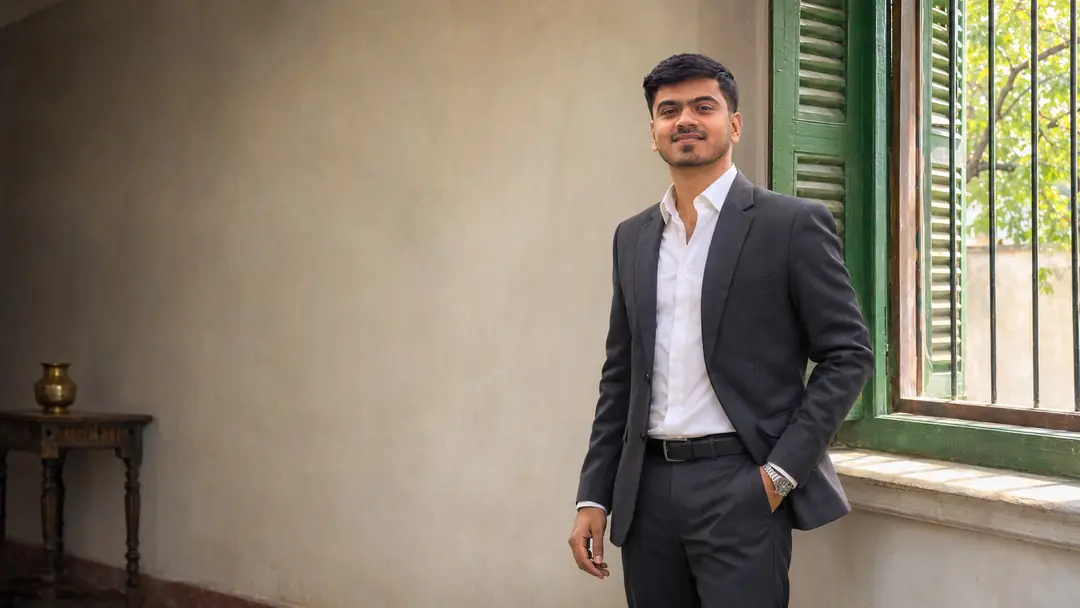
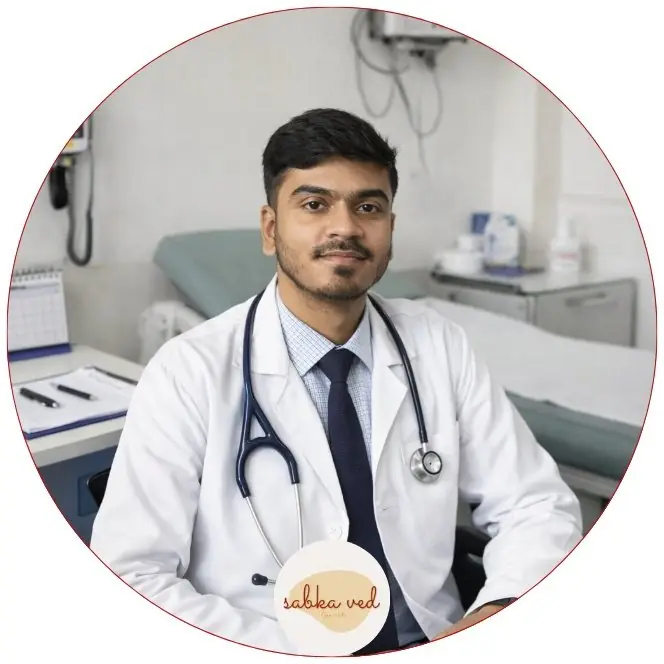
Dr. Aditya Kunal holds a BAMS degree and has over five years of clinical experience, focusing on gut and metabolic health. He is happy to share his credentials, explain every medicine he suggests and coordinate with your other doctors. Patients looking for the best Ayurvedic doctor in Patna can visit his clinic near Bajrang Puri, and anyone in India can book a 30 minute online consultation.
Frequently asked questions
How many years is the BAMS course?
BAMS takes five and a half years in total: four and a half years of academic study followed by a one year compulsory rotating internship in hospital departments. Postgraduate MD or MS (Ayurveda) takes a further three years.
Who regulates Ayurvedic education in India?
The National Commission for Indian System of Medicine (NCISM), set up under the NCISM Act of 2020, regulates Ayurvedic education and maintains the national register. It replaced the Central Council of Indian Medicine, which had worked under the Indian Medicine Central Council Act of 1970. The Ministry of Ayush handles policy.
Is NEET required for BAMS?
Yes. Admission to BAMS in India is through the NEET-UG examination, followed by counselling for government and private seats.
Can a BAMS doctor prescribe allopathic medicines?
Only within limits set by law. Indian courts have held that AYUSH practitioners may prescribe modern medicines only where they are enrolled on the relevant register or where a state government has specifically permitted it. A 2023 consumer commission order upheld compensation against an Ayurvedic doctor who prescribed steroids without that authority.
How can I check if my Ayurvedic doctor is qualified?
Ask for their degree and registration number, then check it with the State Board of Indian Medicine or the NCISM national register. A qualified practitioner will be happy to share these details.
Sources and further reading
- NCISM: NCISM Act 2020, IMCC Act 1970, registers and education regulations (National Commission for Indian System of Medicine)
- Ayurvedic Doctors Cannot Prescribe Allopathic Medicines: MEDicLAWgic commentary (South Asian Journal of Cancer, PMC)
- Career options after Bachelor of Ayurvedic Medicine and Surgery (International Journal of Ayurveda Research, PMC)
- Ministry of Ayush: history and institutions (Wikipedia)
- Bachelor of Ayurveda, Medicine and Surgery (Wikipedia)